


High Performance Energy Gels
-

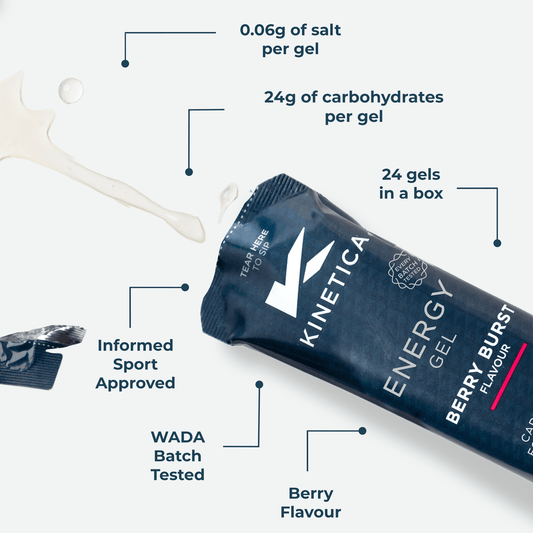
Energy Gel Berry Burst - 24 x 70g Berry Burst 24 Pack
Berry Burst / 24 PackRegular price £35.99Regular priceUnit price per -

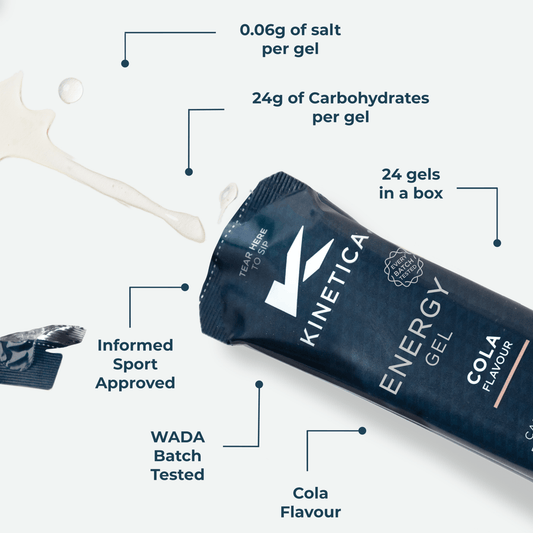
Energy Gel Cola - 24 x 70g Cola 24 Pack
Cola / 24 PackRegular price £35.99Regular priceUnit price per


FIND OUT WHICH ENERGY GEL TO USE?


READ OUR BLOG


Designed as a convenient and quick source of carbohydrates during training and competition, energy gels are widely used as part of fueling strategies in endurance and high-intensity sports. With a portable format, consumption is quite easy while running, cycling or competing, allowing athletes to maintain fueling without interrupted performance.
Sports nutrition research highlights the importance of carbohydrates during prolonged exercise or training sessions, particularly because the glycogen stores gradually decline during sustained activity. Maintaining proper carbohydrate availability is considered a key component in endurance fueling strategies.
Energy gels for running are formulated to offer a quick and practical way to consume carbohydrates when traditional foods or drinks may seem less convenient. With a compact design, athletes can leverage a quick fuel, making them a good choice for races, long training sessions and demanding competition schedules. Depending on your preferences, you can choose between caffeinated and non-caffeinated energy gels, allowing your fueling activities to be tailored to different training environments and personal preferences.
Why Do Athletes Need Top-Rated Energy Gels?
When it comes to exercises that are prolonged or are highly intense, the body heavily relies on stored carbohydrates in the body (glycogen) as an energy source. However, as training demand increases, these energy stores deplete. This is why most research recommends a proper intake of carbohydrates for sustained energy levels. In fact, according to a recent research in the National Library of Medicine, consuming carbohydrates during prolonged training sessions can help maintain energy availability and support sustained performance.
Ensures Energy Availability during Exercise
When exercise or a training session goes beyond 60 minutes, maintaining carbohydrates intake becomes vital. Several pieces of evidence suggest that athletes often aim to consume the right amount of carbs during regular or longer training sessions to support their performance.
In this context, an energy gel can be a practical carbohydrate intake solution because of the following reasons:
- They deliver carbohydrates in a compact, convenient and portable form.
- They can be consumed quickly without stopping activity.
- They allow athletes to manage their fueling strategies with convenience and in structured intervals.
Designed for Good Fuelling Strategies
During competitive sports like running or cycling, chewing solid food or carrying bottles of liquids in large volumes may not be a practical choice. Running energy gels are formulated to provide a measured dose of carbohydrates that can be easily consumed without interrupting activity. This convenience has made energy gels a common part of practical fuelling strategies when it comes to endurance sports, team sports and high-intensity training sessions.
Different Types of Energy Gels: Caffeine vs Non-Caffeine
Before we get into the different types of energy gels, here’s why they are important in the first place. Energy gels are formulated to deliver fast, efficient fuel to the body, especially when it needs it the most. During prolonged sessions, glycogen levels can quickly deplete. Once they run out, energy levels may also drop, affecting performance. Energy gels for running and cycling may offer a rapid carbohydrate source that is easy to consume mid-session without slowing you down or interrupting any activity.
Below are some of the best benefits of energy gels:
- They are a fast-absorbing source of carbohydrates, perfect for immediate fuel.
- They are convenient, portable and easy to take, without interruption.
- No chewing or heavy digestion is required.
- They support endurance, pace consistency and mental focus.
- They help delay fatigue and improve performance.
Energy Gels with Caffeine- For Focus & Extra Push
Caffeine plays a vital role in endurance performance by supporting alertness, perceived performance and reaction time. Energy gels with caffeine are ideal for long runs, rides, races, competition, last-stage fatigue and early morning/late-morning sessions. These gels may be used strategically for an extra mental and physical boost.
Energy Gels without Caffeine - Pure Fuel with Zero Stimulants
If your session calls for reliable energy or you prefer taking gels without the jittering stimulants, energy gels without caffeine can be a good pick. Non-caffeinated energy gels are perfect for building an energy base throughout training and racing. These gels are often ideal for regular training sessions, evening workouts, or if you are sensitive to caffeine and still need an energy boost.
Caffeine vs Without Caffeine Energy Gels: What to Choose?
Choosing between caffeinated and non-caffeinated energy gels may depend on your training goal and individual tolerance. While both options support carbohydrate intake during exercise, caffeine may offer an additional performance boost when used strategically.
Energy Gels with Caffeine
Caffeine is widely studied in sports nutrition for its role in supporting alertness, focus, and perceived effort during high-endurance training. Several studies suggest that caffeine may also help athletes feel more energised and maintain concentration, especially during the later stages of a highly intense training session. In this context, energy gels with caffeine are mostly chosen to support mental sharpness and sustained effort, especially during the later phases of training or competition when fatigue begins to build.
Why Athletes May Choose Caffeinated Energy Gels?
Caffeinated energy gels for running or high-intensity training sessions can be used strategically rather than continuously. Many athletes may choose to consume caffeine at later stages or exercises, when fatigue begins to build.
Below are some of the common scenarios where caffeine energy gels may be used:
- Final stages of a training or a competition
- Late-race fueling strategies
- High-intensity training blocks
- Early mornings or late evening sessions
- Situations that require high energy or focus
Sports nutrition guidelines clearly state that caffeine intake between the range of 3-6mg per kg of body mass can be taken for performance. However, individual tolerance may vary. Because caffeine sensitivity may differ from individual to individual, many athletes may practice caffeine intake before actually consuming it for training or competition.
When Non-Caffeinated Energy Gels May Be Preferred?
Non-caffeinated running energy gels provide the same fast-absorbing carbohydrate formula, minus the stimulant ingredients. They are most often used when athletes prefer carbohydrate intake or stimulant intake. Below are some situations where non-caffeinated energy gels may be preferred:
- Early stages of training or competition
- Evening training session
- Athletes sensitive to caffeine
- Younger athletes
- Maintaining consistent carbohydrate levels throughout long events
- Consuming Both Formats as Part of a Fueling Strategy
Many athletes adopt a mixed approach, where they may use energy gels without caffeine to maintain carbohydrate levels during training and consume caffeinated energy gel later in the session for a sudden boost in energy.
This fueling strategy may allow the athlete to maintain a consistent carbohydrate level in the body and introduce caffeine only when actually needed. It can also reduce the risk of high caffeine intake. It is vital to note that fueling strategies should be practised in training before they may be implemented during competition. This would determine which energy gels are best for running and other endurance sports for you.
How The Best Energy Gels May Support Endurance Performance?
Endurance performance is closely linked to the body’s ability to maintain carbohydrate levels during training. As exercise duration increases, the body’s muscle glycogen stores may begin to deplete. In this context, blood glucose becomes increasingly important to sustain proper energy levels.
Sports nutrition research highlights the importance of carbohydrate intake during training sessions that may last longer than 60-90 minutes, especially if the training is of high intensity.
According to a stance in the International Society of Sports Nutrition, carbohydrate intake during prolonged training sessions may support endurance capacity and help maintain performance as glycogen levels may begin to deplete. Energy gels are designed to support this requirement in a format that can be consumed easily and without interruption.
Supporting Glycogen Availability During Long Sessions
Muscle glycogen is a primary fuel source during a high-intensity training session. However, glycogen levels can quickly deplete as these stores are often limited.
Research suggests that when glycogen levels begin to decline, athletes may experience difficulty maintaining pace, reduced training quality, early onset of fatigue and reduced power output.
Maintaining carbohydrate intake during training may help support blood glucose levels and delay fatigue during long training sessions or competitions. In this context, energy gels offer a practical way of maintaining carbohydrate intake without interrupting training.
Supporting Sustained Energy Levels
Endurance performance is not just about finishing a session; it is more about maintaining intensity throughout that session. Consistent carbohydrate intake can allow athletes to sustain their training quality throughout the duration of their training.
Research indicates that carbohydrate intake during exercise may help support sustained endurance performance, maintain exercise intensity, reduce decline in pace or energy levels and improve capacity for longer training sessions.
Supporting Repeated High-Intensity Training
Energy gels are not used by endurance athletes. Many team sports and high-intensity training formats rely heavily on proper carbohydrate levels. Sports like hockey, football, and even running may involve repeated bursts of high-intensity efforts. Such efforts rely on carbohydrates as a primary fuel source, especially during intense phases of the training.
Sports nutrition research highlights that carbohydrate intake may support performance in sports that involve high endurance or intensity.
In this context, energy gels provide a portable fuelling option during tournament formats, long training sessions, high volume training days and half-time or breaks in between the sessions or competition.
A Practical Fueling Strategy for Real-World Competition
In real-world competition settings, athletes often face challenges like limited access to food, travel, unpredictable schedules and varying environmental conditions. Every energy gel by Kinetica Sports is designed to address these challenges by offering the following:
- Compact & portable fuelling
- Measured carbohydrate intake
- Minimal disruption to performance
- Easy integration into race plans
This practical solution is the reason why energy gels are widely used across endurance, team and strength-building sports where maintaining energy is critical.
Frequently Asked Questions: Energy Gels
Below are some of the most common questions people ask when it comes to the best energy gels for running and other high-endurance sports:
What are energy gels, and how do they work?
Energy gels are concentrated carbohydrate sources designed for use during or before a training session. They provide fast-absorbing glucose that may help maintain blood glucose levels when muscle glycogen levels start to decline during prolonged training sessions.
Are energy gels good for running?
Energy gels are commonly used by runners during long training or races. Carbohydrate intake during endurance activities like running may help support sustained energy levels, reduce perceived efforts and help maintain energy levels in the later stages of exercise.
When should I take energy gels while running?
According to many fueling strategies, the first energy gel may be taken after 30-40 minutes of running, followed by a regular intake every 20-45 minutes depending on the intensity and duration. Fueling at the start of the activity may help maintain carbohydrate availability throughout the session.
What are the best energy gels for endurance sports?
The best energy gels for running and other endurance sports are typically easy to digest and portable. They can be taken without interrupting any activity. Some athletes also use energy gels with caffeine at the start of the training, followed by consuming caffeinated energy gels at the end, when fatigue begins to kick in.
Are energy gels suitable for beginners?
Energy gels are usually helpful for sessions that last longer than 60-90 minutes. In this context, beginners should be introduced to energy gels gradually during training to understand tolerance and improve energy levels.
Do energy gels contain caffeine?
Some energy gels contain caffeine, while others are entirely free from it. Kinetica Sports offers energy gels with and without caffeine. The choice often depends on your caffeine tolerance levels, personal preference and intensity of the training session.
How many energy gels should you take during a session?
According to the sports nutrition guidance, about 30-60grams of carbohydrates can be consumed per hour, and up to 90 grams per hour when longer endurance events may be tolerated.
Are energy gels available in the UK?
Yes, energy gels are widely accessible throughout the UK. Brands like Kinetica Sports offer energy gels with and without caffeine, allowing you to choose according to your tolerance.